

1
/
of
1
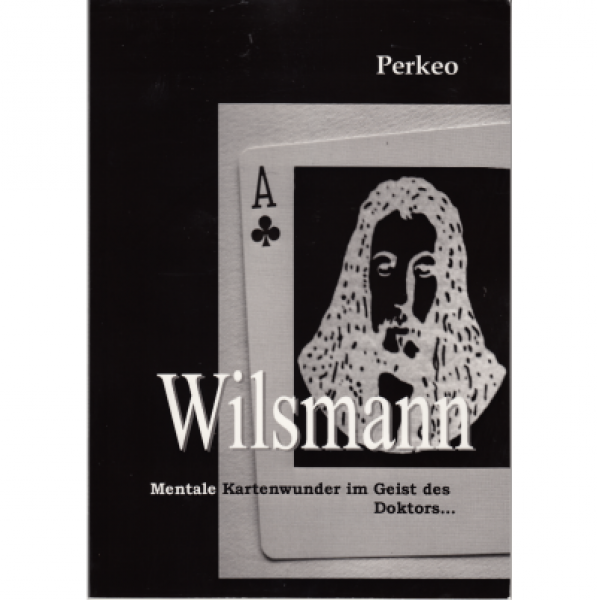
Wilsmann - Mental card wonders | Perkeo
Wilsmann - Mental card wonders | Perkeo
Regular price
€16,50
Regular price
Sale price
€16,50
Taxes included.
Shipping calculated at checkout.
Quantity
Couldn't load pickup availability
- Lieferzeit: 3-5 Tage*
Can the thoughts, ideas, experiments, and routines of a man whose 50th death anniversary will be next year still be relevant today? The answer is a resounding "Yes!"
Okay, admittedly. There's a small "but" or two, because Wilsmann worked with skat games and operated linguistically and stylistically on a level that today requires every listener to have a "Google connection." But what lies beneath are pearls, or, better said, "viruses of inspiration." Many have been infected by them, from Hanns Friedrich to Utz Napierala to Rudolf Braunmüller. And now Perkeo has been.
From the wealth of material, he has picked eight routines and ideas, "tweaked" them, as Jochen Zmeck would call it, converted them into 52-card packs, and sometimes completely repackaged them, but without taking away their creator's breath. The trick-technical principles are, according to Wilsmann's declared preference, of a mathematically magical nature. Fans of manipulation and dexterity, however, should not be deterred, because the exciting stories and surprising effects can also be presented in their own way...
Demon Power – A spectator shuffles a deck and chooses a card, which they themselves bury in the deck. They divide the deck into three packets. The performer suspects the spectator's card is in one of them. However, their three guesses prove incorrect. They give up, have the card called out, select it, and hold it at a distance above one of the failed attempts. It must be a demon that is now swapping places between the table and the hand...
Circe's Magic - A playing card is tricked into believing it's someone else! And then it actually is. It's a little "psycho-cabaret."
Friday the Thirteenth - After the bizarre cabaret, things get a little darker: The cards are shuffled and rolled, and then the spectator card is placed in a position in the game that corresponds to the only entry in a pocket calendar.
Portent – A spectator freely chooses eight cards and memorizes one. The performer finds it without looking at or knowing the cards.
Synchronous Thought Switching – Two spectators, two games. The performer announces that they will synchronize their thoughts. Everyone freely chooses a game, names a playing card, and picks it out. There are different values in different positions. So where is the synchronicity of thoughts? This is demonstrated by the fact that spectator 1's card in spectator 2's game is in exactly the same position on the top as spectator 2's card in spectator 1's game. And this is without any manipulation by the performer!
Harmony – a fourfold agreement under incredible conditions.
Phenomenon – the only effect in Wilsmann's "Zersägter Jungfrau," newly redesigned to use just two 52-card decks. The spectator receives one, shuffles it, selects a card, and lets it disappear into the deck. Both follow a numerological ritual, but he shuffled the deck and never released it. Now he calls out his card. It is picked out from the other deck, in which all cards have numbers on the back. The number on his card value indicates the exact position of his card in his shuffled deck.
Telepathy – A perfect two-person code for transmitting one of 52 cards. No fishing. The medium makes three correct statements in succession, with the third already being the target card.
72 pages in DIN A5 format
Okay, admittedly. There's a small "but" or two, because Wilsmann worked with skat games and operated linguistically and stylistically on a level that today requires every listener to have a "Google connection." But what lies beneath are pearls, or, better said, "viruses of inspiration." Many have been infected by them, from Hanns Friedrich to Utz Napierala to Rudolf Braunmüller. And now Perkeo has been.
From the wealth of material, he has picked eight routines and ideas, "tweaked" them, as Jochen Zmeck would call it, converted them into 52-card packs, and sometimes completely repackaged them, but without taking away their creator's breath. The trick-technical principles are, according to Wilsmann's declared preference, of a mathematically magical nature. Fans of manipulation and dexterity, however, should not be deterred, because the exciting stories and surprising effects can also be presented in their own way...
Demon Power – A spectator shuffles a deck and chooses a card, which they themselves bury in the deck. They divide the deck into three packets. The performer suspects the spectator's card is in one of them. However, their three guesses prove incorrect. They give up, have the card called out, select it, and hold it at a distance above one of the failed attempts. It must be a demon that is now swapping places between the table and the hand...
Circe's Magic - A playing card is tricked into believing it's someone else! And then it actually is. It's a little "psycho-cabaret."
Friday the Thirteenth - After the bizarre cabaret, things get a little darker: The cards are shuffled and rolled, and then the spectator card is placed in a position in the game that corresponds to the only entry in a pocket calendar.
Portent – A spectator freely chooses eight cards and memorizes one. The performer finds it without looking at or knowing the cards.
Synchronous Thought Switching – Two spectators, two games. The performer announces that they will synchronize their thoughts. Everyone freely chooses a game, names a playing card, and picks it out. There are different values in different positions. So where is the synchronicity of thoughts? This is demonstrated by the fact that spectator 1's card in spectator 2's game is in exactly the same position on the top as spectator 2's card in spectator 1's game. And this is without any manipulation by the performer!
Harmony – a fourfold agreement under incredible conditions.
Phenomenon – the only effect in Wilsmann's "Zersägter Jungfrau," newly redesigned to use just two 52-card decks. The spectator receives one, shuffles it, selects a card, and lets it disappear into the deck. Both follow a numerological ritual, but he shuffled the deck and never released it. Now he calls out his card. It is picked out from the other deck, in which all cards have numbers on the back. The number on his card value indicates the exact position of his card in his shuffled deck.
Telepathy – A perfect two-person code for transmitting one of 52 cards. No fishing. The medium makes three correct statements in succession, with the third already being the target card.
72 pages in DIN A5 format
Share
_________________________________
* gilt für Lieferungen innerhalb Deutschlands, Lieferzeiten für andere Länder entnehmen Sie bitte der Schaltfläche mit den Versandinformationen